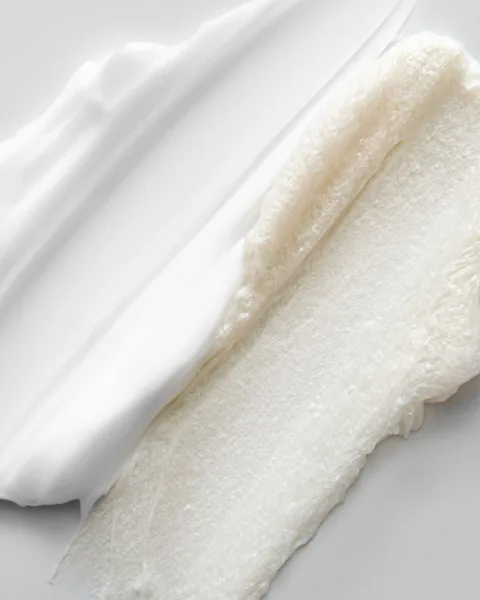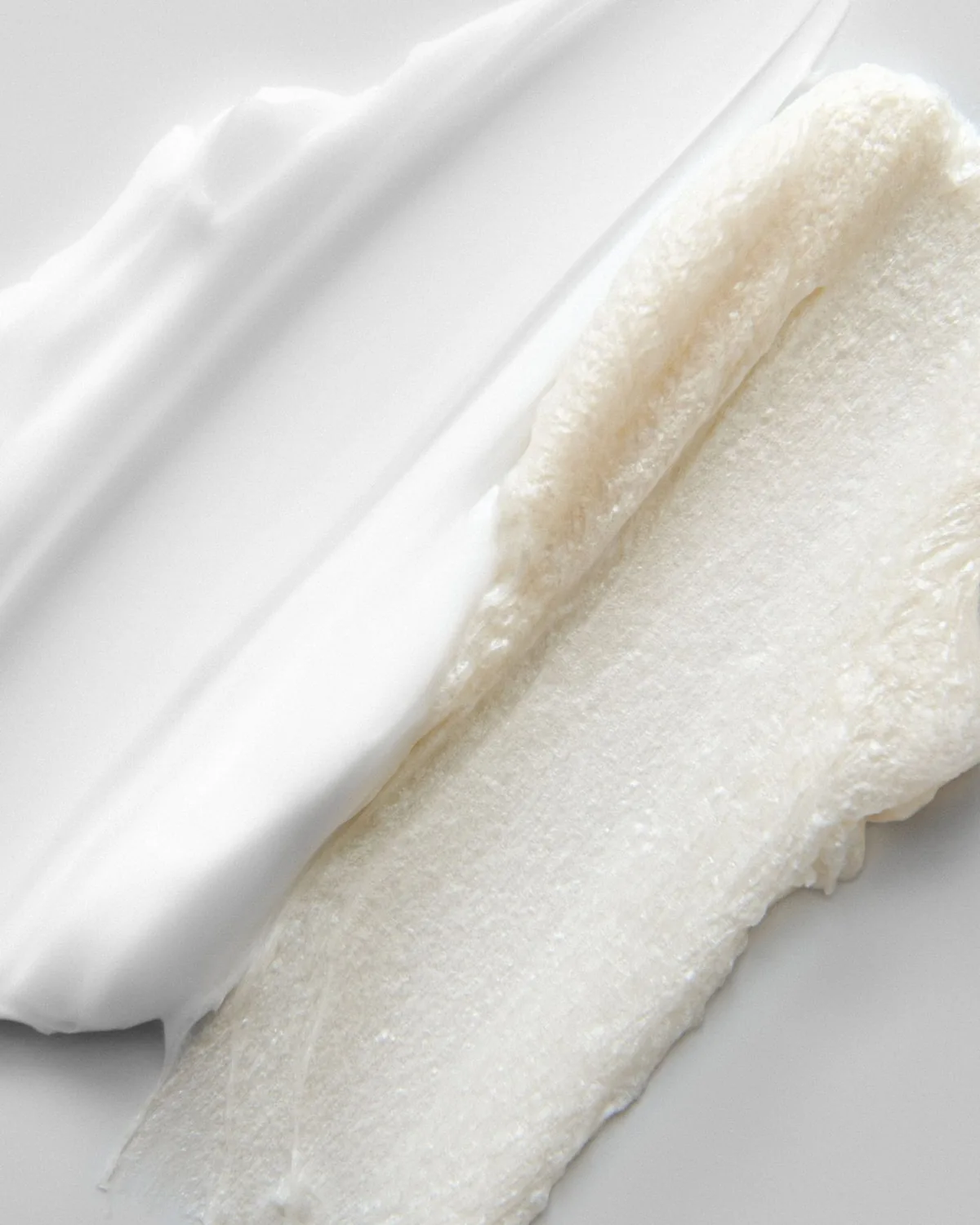
Start with the skin feel
Before listing ingredients, decide whether you want a light day cream, richer night care or a body lotion. Define the intended user, use, texture and packaging. Each formulation decision can then serve a clear purpose.
The structure of a base cream
In an oil-in-water (O/W) emulsion, oil droplets are dispersed within an aqueous continuous phase. A suitable emulsifying system connects the phases. Structure, viscosity and stability also depend on supporting ingredients and processing.
- Water phase: purified water and a suitable humectant such as glycerin.
- Oil phase: emollients selected for absorption, slip and after-feel.
- Emulsifying system: a specified emulsifier and, where needed, a co-emulsifier or structuring ingredient.
- Supporting system: appropriate preservation, pH control and selected actives.
Build the base before adding actives
Develop a simple base first and document every trial. Monitor appearance, pH, viscosity and changes over time. Add actives step by step: changing one variable at a time makes its effect easier to understand.
The next stage
The prototype needs stability, microbiological protection and packaging compatibility assessment. Processing temperatures and concentrations follow the documentation of the selected raw materials. This architecture is a development starting point; a commercial formula requires testing and safety assessment.
For your own brand, send PIBU LAB a brief with your preferred texture, format and target market.